
This homemade lemongrass paste comes together in just 15 minutes with fresh, simple ingredients and loads of bright, citrusy flavor. Keep a batch on hand to add a quick flavor boost to curries, soups, stir-fries, marinades, and more! For another easy Asian-inspired dinner, try these Vegetable and Tofu Stir-Fry Noodles.
If you love bold Thai flavors, try my Homemade Thai Red Curry Paste, Homemade Yellow Curry Paste, or Easy Panang Curry Paste Recipe next.
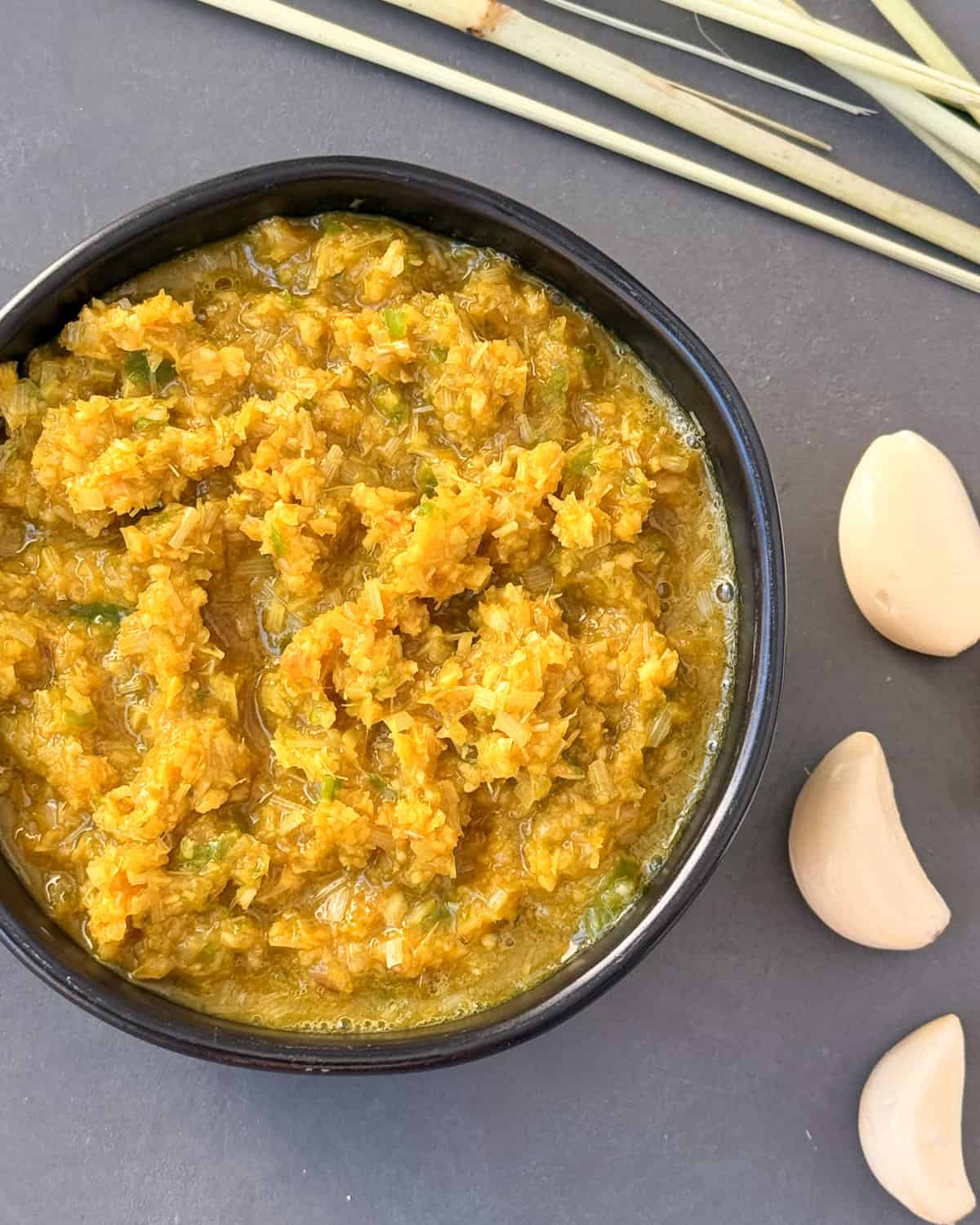
I love keeping a batch of this lemongrass paste in my fridge because it makes adding fresh, aromatic flavor to weeknight meals so easy. I use it as the flavor base for my Lemongrass Coconut Curry, and my Vegan Ramen Noodles. Both dishes taste like I spent way more time on dinner than I actually did.
If you enjoy making flavorful ingredients from scratch, check out my collection of easy homemade paste recipes for more kitchen staples to keep on hand. And for a completely different way to use fresh stalks, my Lemongrass Simple Syrup turns them into a bright, citrusy sweetener for drinks and desserts.
Quick Look: Lemongrass Paste
- ⏱ Prep Time: 10 minutes
- 𖦹 Blend Time: 5 minutes
- ⏳ Total Time: 15 minutes
- 🔋 Yield: 8 ounces
- ⚡ Calories: 51 calories per 1-ounce serving
- 🌿 Flavor Profile: Bright, citrusy, and herbal.
- 👌 Difficulty: Easy and meal prep friendly.
SUMMARIZE & SAVE THIS CONTENT ON
Why I Love This Recipe
Fresh, bold flavor: Bright, citrusy, and aromatic with a savory kick. A little goes a long way!
Quick and easy: Prep and blend everything in just 15 minutes. No cooking needed to make the paste.
Versatile: Add it to curries, soups, noodles, stir-fries, marinades, and sauces.
Meal prep friendly: Keep a batch in the fridge or freezer for an easy flavor boost.
Easy to customize: Adjust the heat and seasonings to your taste while keeping it completely vegan.
Key Ingredients & Substitutions
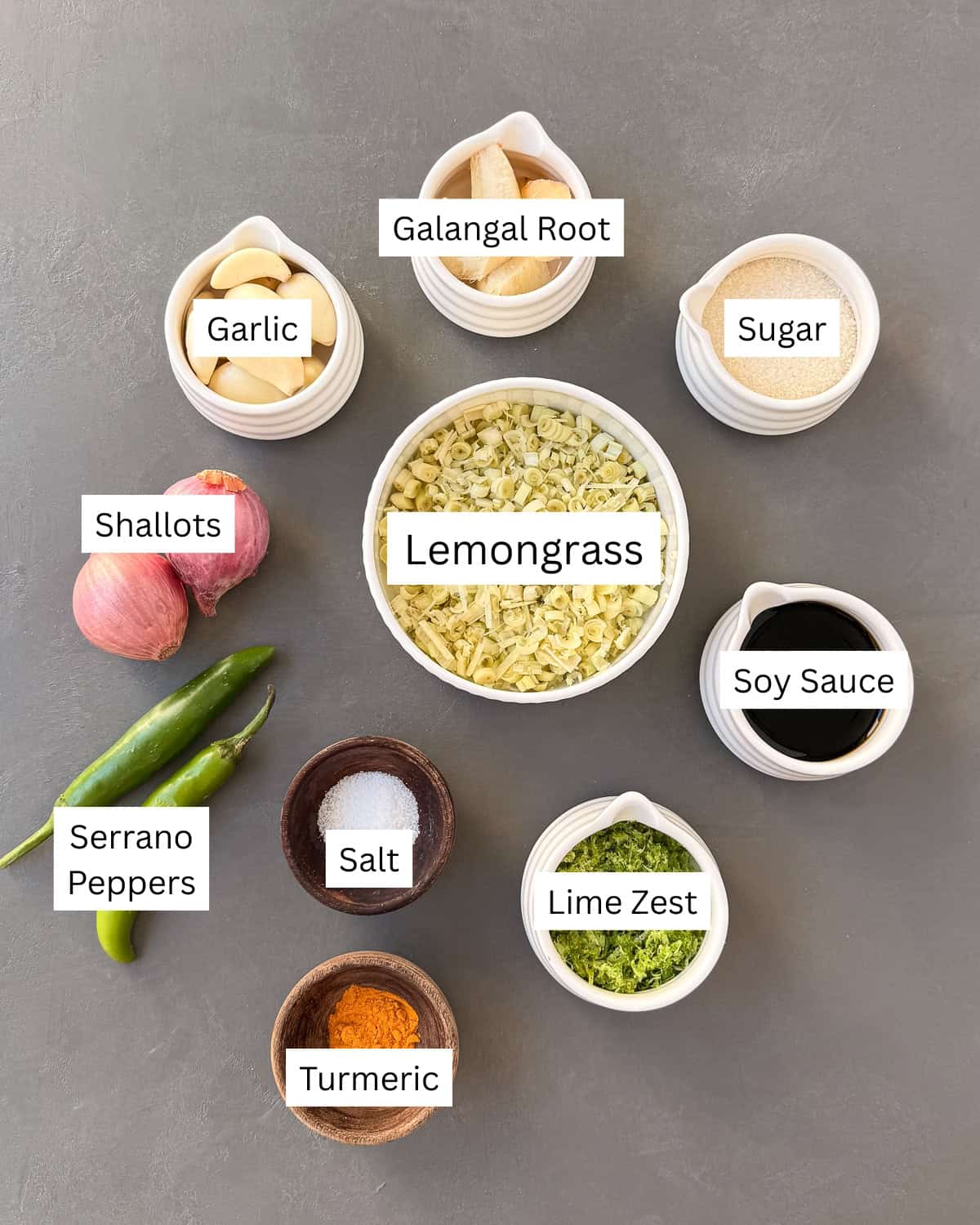
- Lemongrass: You’ll need about 6-8 stalks to yield 1 cup once trimmed and minced.
- Garlic & Shallots: If you don't have shallots, red onion works too, though its flavor is slightly sharper.
- Serrano Peppers: I remove the seeds for a milder batch or leave them in for more heat. You can also use jalapeños for less spice or Thai chilies to turn up the fire.
- Vegan Worcestershire Sauce: If needed, substitute an equal amount of tamari or soy sauce.
- Sugar: I use raw sugar, but brown sugar or maple syrup works too.
- Galangal Root: Look for fresh galangal at Asian markets. If you can't find it, use ¼ cup fresh ginger plus 1 tablespoon lime juice.
- Turmeric Powder: Substitute 1 teaspoon freshly grated turmeric for every ½ teaspoon of ground turmeric.
- Lime Zest: Lemon zest works in a pinch for a slightly different citrus profile.
Get the full list of ingredients and measurements on the printable recipe card below.
How to Make Lemongrass Paste
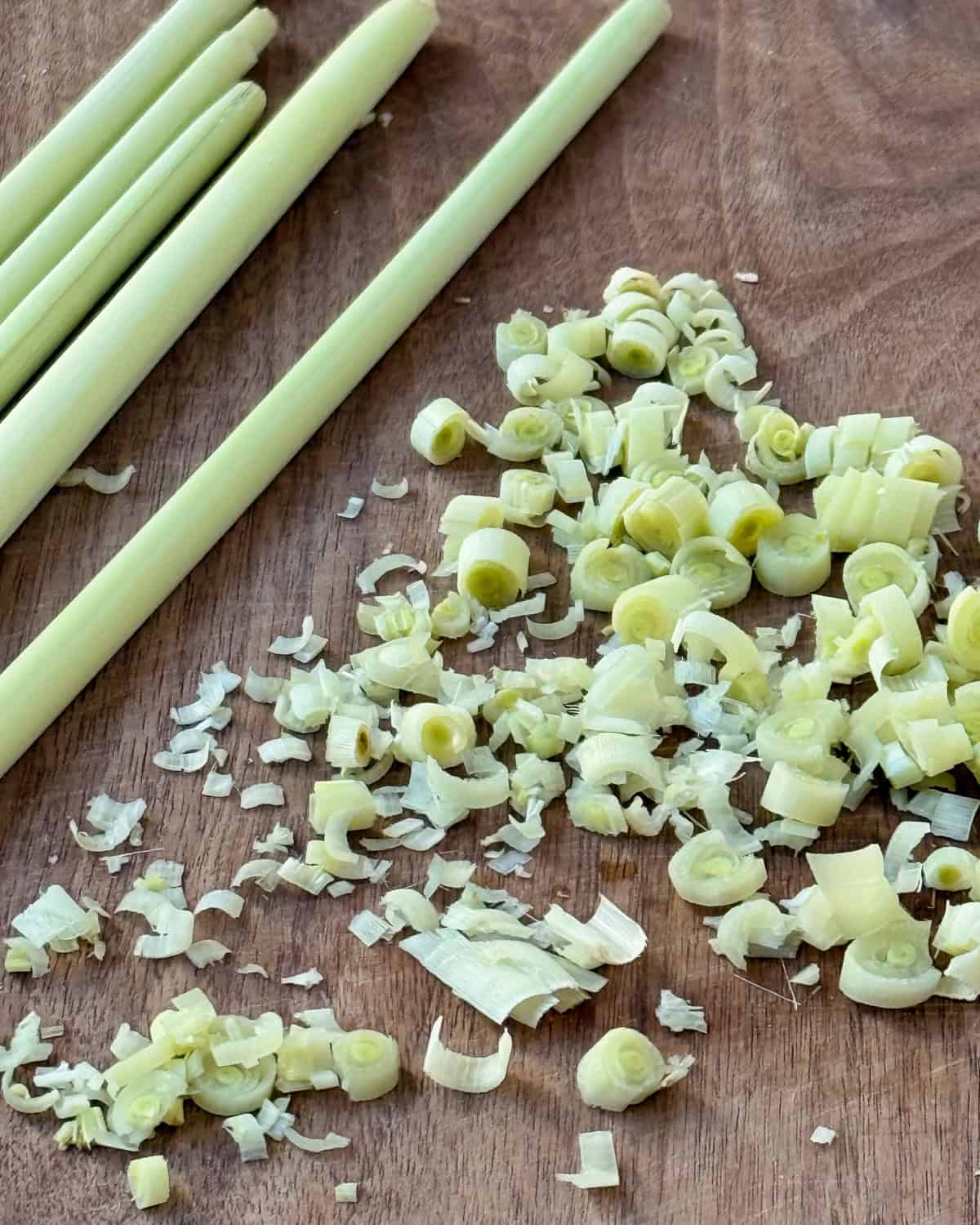
Step 1: Remove the tough outer layers and trim the root ends and dry green tops. Thinly slice the tender pale yellow and light green portions. Roughly chop the shallots, serranos, and galangal.
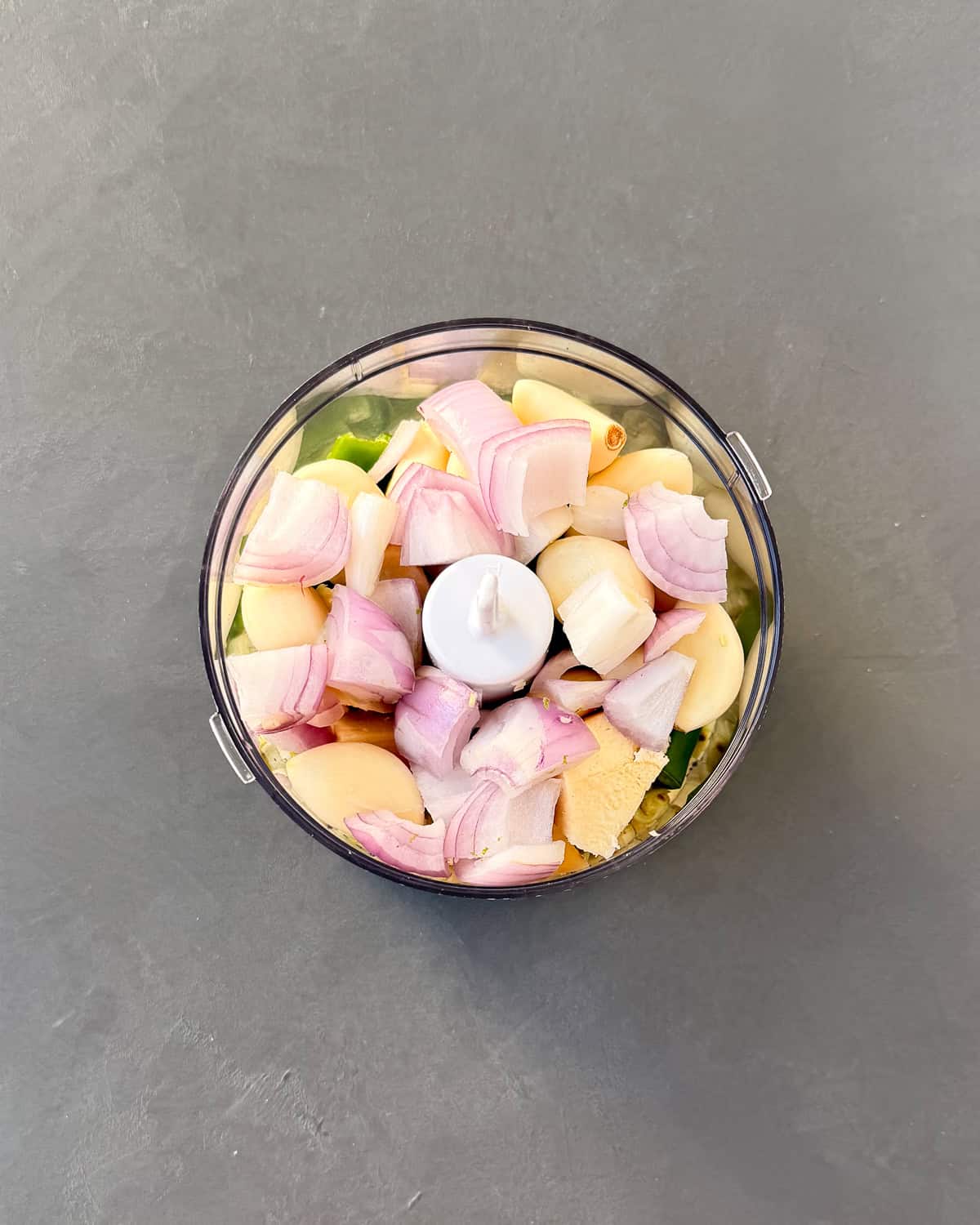
Step 2: Add everything to a food processor and pulse several times to break down the fibrous ingredients.
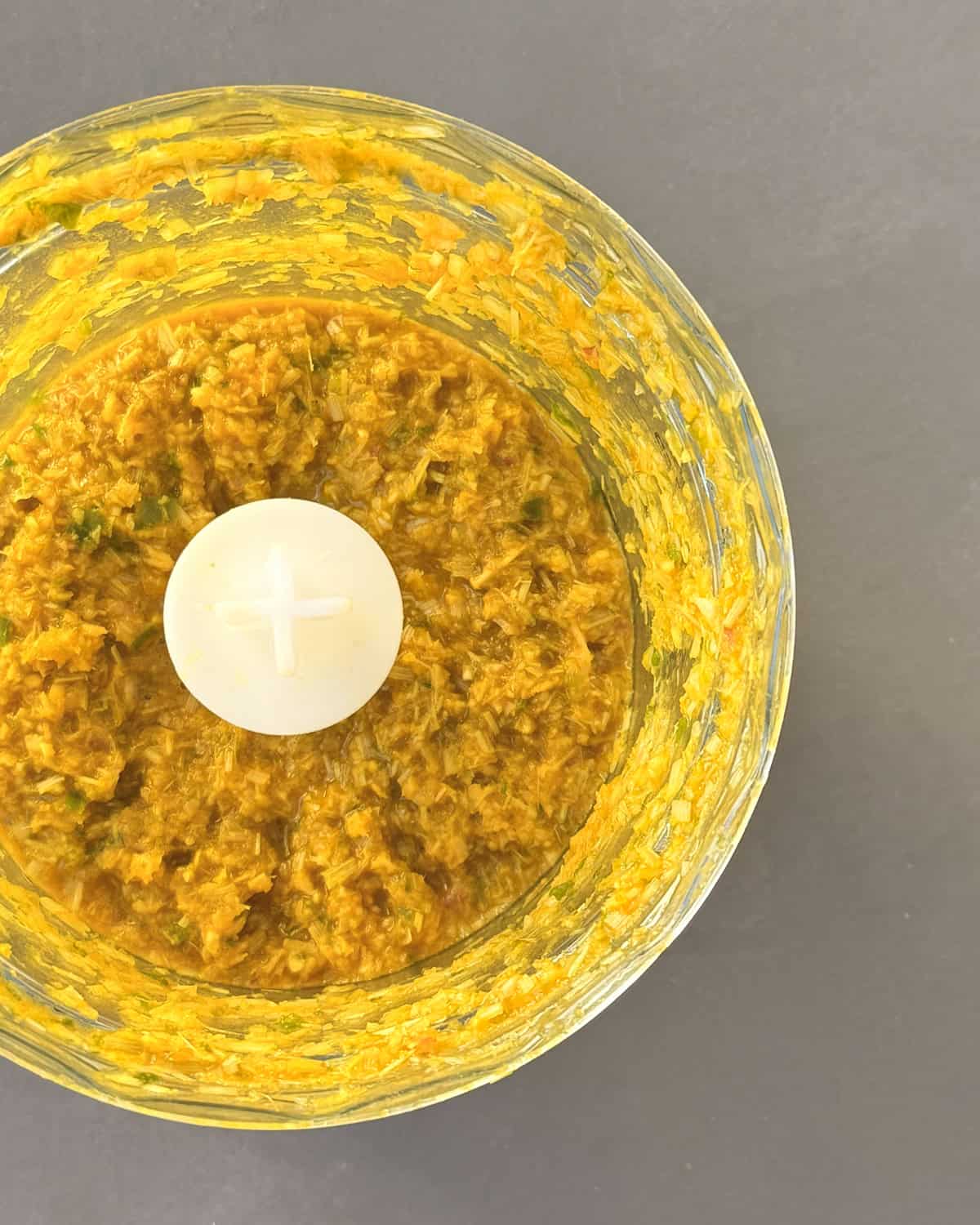
Step 3: Blend until thick and finely processed, scraping down the sides as needed. If the mixture isn't moving through the blades, add a small splash of water.
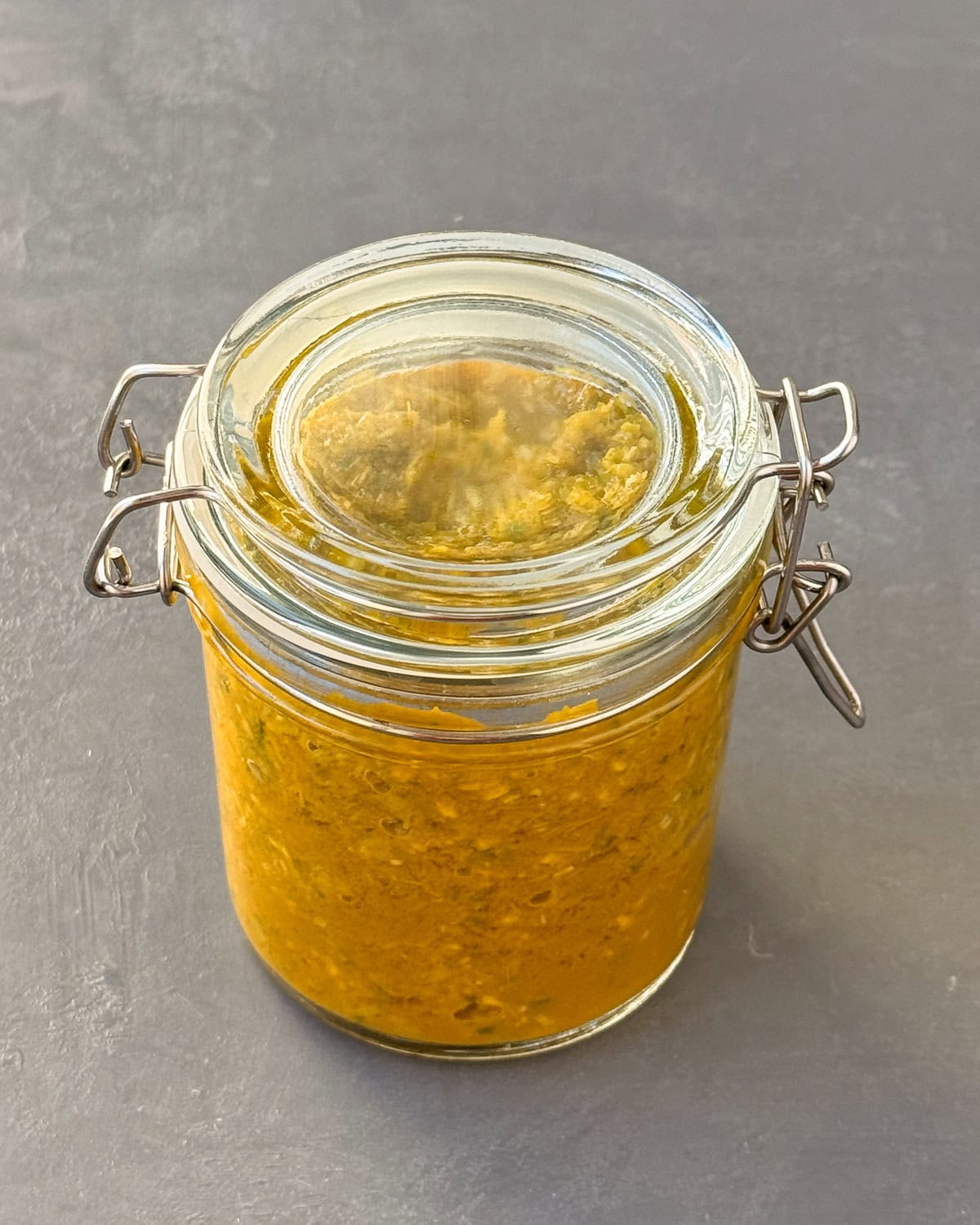
Step 4: Use the paste immediately or transfer it to an airtight container. For even more developed flavor, let it rest for about 30 minutes before using.
Pro Tip: I prefer a food processor because it breaks down fibrous lemongrass without requiring much liquid. A high-speed blender also works but may need more scraping and a splash of water.
Expert Tip
Avoid a fibrous paste: Use only the tender pale yellow and light green lemongrass and process longer if the paste seems stringy.
Add water sparingly: Add just a splash at a time so the paste stays thick and flavorful.
Check the texture: The paste should be thick and finely processed, not silky smooth.
How to Use Lemongrass Paste
Start with about 1 tablespoon of lemongrass paste per serving and add more to taste. I usually cook the paste briefly to mellow the raw aromatics and bring out its bright, savory flavor.
Curries: Sauté the paste for about 1 minute before adding coconut milk, broth, or other ingredients. For more ways to build bold Thai flavors, try my Creamy Thai Green Curry with Vegetables or Thai Red Curry with Vegetables.
Soups and ramen: Stir it into brothy or coconut-based soups for an aromatic citrusy boost. It can also add another layer of flavor to an Easy Asian-Inspired Noodle Soup.
Marinades: Mix a spoonful into tofu or vegetable marinades before cooking, especially when making Crispy Marinated Baked Tofu.
Thai-inspired soups: Use it when fresh stalks aren't available. My creamy Vegan Tom Kha Soup works with fresh lemongrass or lemongrass paste.
Since this homemade paste contains additional aromatics and seasonings, it isn't necessarily a 1:1 replacement for plain store-bought lemongrass paste.
Storage Tips
- Refrigerator: Store in an airtight container for up to 3 to 4 days.
- Freezer: Freeze in 1-tablespoon portions, then transfer to a freezer-safe container for up to 6 months.
- To use: Add frozen paste directly to curries, soups, and broths, or thaw overnight in the refrigerator.
- Meal Prep Tip: I freeze the paste in 1-tablespoon portions so I can grab exactly what I need.
Lemongrass Paste FAQs
Yes. Lemongrass paste is a convenient fresh lemongrass substitute for curries, soups, sauces, and marinades. Since this homemade version contains additional aromatics and seasonings, it isn't a direct 1:1 substitute. For store-bought paste, follow the package directions.
No, lemongrass paste doesn't need to be cooked when making it. However, I usually sauté or simmer it when adding it to a recipe to mellow the raw aromatics and bring the flavors together.
Fresh lemongrass is ideal for infusing soups, broths, and curries, while lemongrass paste distributes flavor throughout a dish. Paste is also more convenient because there's no need to trim or remove whole stalks after cooking.
This lemongrass paste is mildly spicy from serrano peppers. Remove the seeds or use jalapeños for less heat, or substitute Thai chilies for more.
Yes. Use a high-speed blender, stopping to scrape down the sides as needed. Add a small splash of water if the ingredients aren't moving through the blades.
More Vegan Thai Recipes


If you tried this Lemongrass Paste recipe or any other recipe on my blog, please leave a 🌟 star rating and let me know how it goes in the 📝 comments below.

Lemongrass Paste Recipe
DESCRIPTION
EQUIPMENT
- Food Processor or High Speed Blender to finely process paste
- Vegetable Peeler to peel galangal root
- Kitchen Knife (sharp) to chop vegetables
- Zester to shave the outer skin of the limes
INGREDIENTS
- 6-8 stalks lemongrass approx. 1 cup when thinly sliced
- 12 cloves garlic
- 1 whole shallot
- 2 whole serrano peppers (slice the chili to remove some seeds, if you don't want too much heat)
- ¼ cup Worcestershire sauce (vegan) or low sodium soy sauce
- ¼ cup sugar
- ¼ cup galangal root or ¼ cup of chopped reg ginger plus 1 tablespoon of lime/lemon juice
- 1 teaspoon turmeric powder
- ½ teaspoon salt
- ¼ cup lime zest
METHOD
- Peel and discard the tough outer leaves, root ends, and dry green tops of the lemongrass. Thinly slice the tender, pale yellow and light green inner core.
- Carefully peel the skin of the galangal root using a small pairing knife or vegetable peeler.Zero-waste tip: Store the extras in the freezer and use when needed.
- Use a zester to remove the outer layer of the limes. Make sure not to go deep into the white pith. Zero-waste tip: Squeeze out the lime juice and store it in an air-tight mason. Keep in the refrigerator and use as needed.
- Roughly chop shallots, Serrano peppers, and peeled galangal root.Note: For a milder flavor, remove the seeds from the Serrano peppers.
- Add all ingredients into the bowl of your food processor . Pulse 5-7 times to break up the fibrous lemongrass and tough galangal before switching to continuous blending.
- Blend continuously until a thick, finely processed paste forms. Pause and scrape down the sides of the bowl as needed. If the mixture stops moving, add a splash of water just to free the blades.
- Transfer the paste to an airtight glass jar or container. Let it rest at room temperature for 30 minutes to allow the aromatic oils to meld before using.
NOTES
- Use the tender stalks: Remove the tough outer layers and use only the pale yellow and light green portions of the lemongrass for the best texture.
- Slice it thinly: Thinly slicing the lemongrass before processing helps break down the tough fibers and prevents a stringy paste.
- Go easy on the water: If the mixture isn't moving through the blades, add just a small splash of water at a time to keep the paste thick and flavorful.
- Don't over blend: The finished paste should be thick and finely processed with no large pieces remaining, but it doesn't need to be completely smooth.


Sabrina Luberto says
We have grown a lot of lemongrass in our yard, love the way it smells and have wanted to attempt to make a paste for cooking with instead of purchasing premade. Thank you for your recipe; I will definitely try to make it very soon. Can I use the lemongrass that I already processed and put in my freezer? Please advise.
Puja Verma says
Thank you so much! 😊 How wonderful to have fresh lemongrass growing right in your yard! Yes, you can absolutely use the lemongrass you've already processed and frozen. There's no need to thaw it completely before making the paste. Just let it soften slightly so it's easier to blend. The texture may be a little softer after freezing, but it should still work beautifully. I hope you enjoy the recipe, and I'd love to hear how your homemade lemongrass paste turns out! 💚
Diane says
Can this paste be frozen?
Puja Verma says
Yes!😃 You can freeze the paste in an airtight container or ice cube trays. It can last up to 3 months in the freezer.
Courtney says
Can I use green Korean chilies if i dont have serranos?
Puja Verma says
Yes, of course. Korean chilis will probably have a lower level of spice than serranos, but it should be fine.
Steve says
Hey there,
Great site.
Just wanted to let you know real quick, as a professional cook who has to look out for people’s food allergies, you should be aware that almost all Worcestershire sauces contain anchovies. The key ingredients in it are vinegar, tamarind, sugar, onions, and anchovies. It is not a vegan or vegetarian ingredient. Only a handful of companies make vegan Worstershire. Just thought you ought to know.
Puja Verma says
So kind of you to bring this to my attention. To make it clear to others, I've updated the recipe post with exactly which vegan Worcestershire sauce I use. Thank you 🙏